
How to Close Your Salon Till Every Night
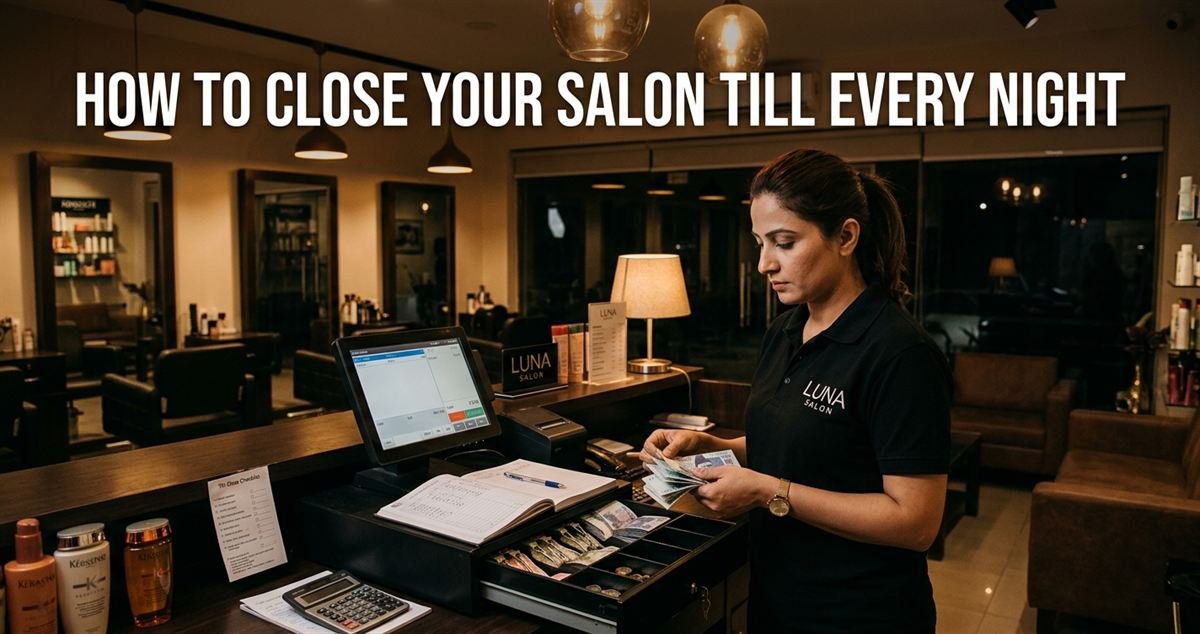
At closing time, most salons do one of two things. Some count the cash, shrug and put it in an envelope. Others don't count it at all. Both approaches work until the envelope comes up short and nobody can say which day it happened.
A proper day close takes about ten minutes. It turns "I think we're short" into "we were 500 short on Tuesday, and this is the bill that explains it."
Why the drawer rarely matches "today's sales"
The cash in the drawer is not the same as today's sales, for four reasons:
- Some sales weren't paid in cash. Cards, bank transfers and mobile wallets go elsewhere.
- Some sales weren't fully paid. A client paid part today and owes the rest.
- Some cash came from old bills. A client settled last week's balance today.
- Some cash left the drawer for tea, a delivery or a staff advance.
If your day close ignores any of these it will never match, and staff soon stop trusting it.
The formula
Expected cash = opening float + cash received today (new bills and old balances) − cash expenses paid today
A worked example
| Item | Amount |
|---|---|
| Opening float | 2,000 |
| Cash from today's bills | 18,500 |
| Cash from old balances settled today | 3,000 |
| Cash expenses (tea, cleaning, delivery) | − 1,200 |
| Staff advance paid from drawer | − 2,000 |
| Expected cash in drawer | 20,300 |
| Counted | 19,800 |
| Difference | − 500 |
Card, bank and wallet totals are checked separately against the terminal slip and your settlement reports.
The ten-minute routine
- Stop billing. Anything after this point goes on tomorrow.
- Print or open the day-close summary, split by payment method.
- Count the cash. Write down the counted figure before looking at the expected figure.
- Check the card terminal's end-of-day total against card sales.
- Record the difference, even if it is zero.
- Leave the same float for tomorrow; bank or lock away the rest.
When it doesn't match
Small differences almost always have boring explanations. Check in this order:
- A card payment recorded as cash, or the other way round.
- A cash expense that wasn't written down.
- A bill edited or deleted after payment.
- Change given incorrectly.
If the same shift keeps coming up short, that pattern deserves a private conversation. You can only spot it because you recorded every day, including the days everything matched.
Let the numbers build themselves
Salonipy's day close counts every payment on the day it actually arrived, old balances included, subtracts cash expenses and shows totals by payment method. See the accounting tools.
Related: Salon accounting software · What to put on a salon invoice · Letting clients pay later